Check the details
Source notes for this guide
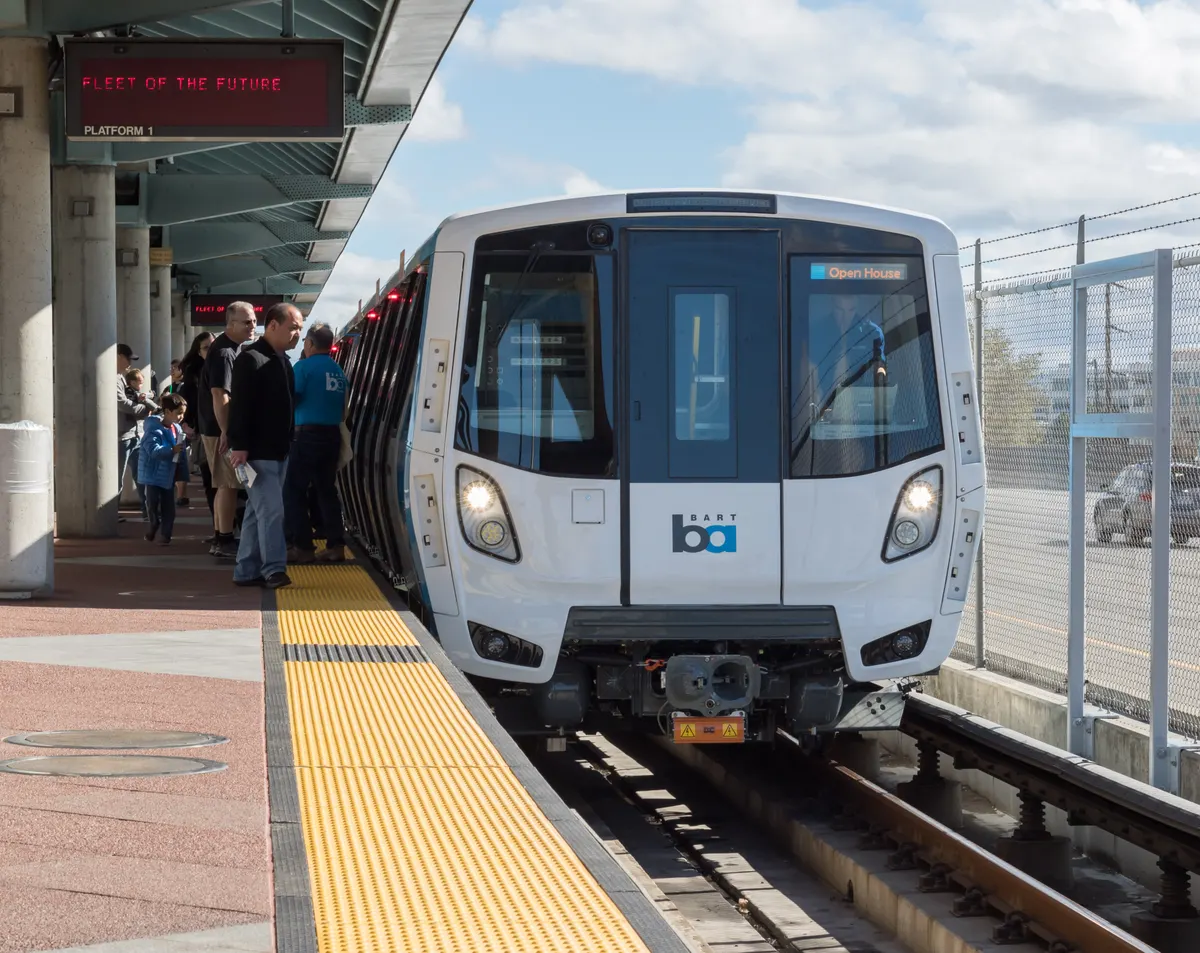
SFO’s BART station is in the International Terminal; the free AirTrain connects airport terminals to the station.
Checked Oct 20, 2026 · Recheck by Oct 27, 2026This detail needs a fresh check before you rely on it. Consult the operator for its current rules.
Bay Area Rapid Transit: Airport Connections (SFO & OAK) ↗The F Market & Wharves stop list includes the Ferry Building, Pier 39 and Fisherman’s Wharf stops. Opposite directions use different stops; this is not a live-service or step-free-access guarantee.
Checked Oct 20, 2026 · Recheck by Oct 27, 2026This detail needs a fresh check before you rely on it. Consult the operator for its current rules.
San Francisco Municipal Transportation Agency: F Market & Wharves ↗For contactless bank-card payment, each rider needs their own card or mobile device. On services requiring both entry and exit taps, use the same card or device for both; this does not mean that every operator requires an exit tap.
Checked Oct 20, 2026 · Recheck by Oct 27, 2026This detail needs a fresh check before you rely on it. Consult the operator for its current rules.
Metropolitan Transportation Commission / Clipper: Tap to Pay with a Contactless Bank Card ↗
For Fisherman’s Wharf, compare the whole trip to your hotel entrance. BART can cover the airport-to-city rail leg, but you will still need a connection and a final walk. With bags, that last leg can matter more than the train ride.
The useful comparison is between BART plus a streetcar, BART plus a road transfer, and a direct airport road transfer. None is always cheapest or quickest. Check the same arrival time, group and hotel address for each option.
Compare the three complete journeys
| Pattern | Include in the comparison | A reason to investigate it |
|---|---|---|
| Airport connection → BART → F streetcar → hotel walk | Each rider’s applicable fares, the street-level change and the last walk | Everyone can manage their bags through transfers |
| Airport connection → BART → taxi or app-based ride → hotel | Each rider’s rail fare plus the actual downtown road quote | You want rail for part of the trip and less final carrying |
| Terminal → direct taxi, prebooked car or app-based ride → hotel | Whole-group quote, luggage capacity and the designated airport pickup | Transfers or the arrival time make a rail connection awkward |
For a road option, request the vehicle capacity your group actually needs. For public transport, consider who can carry a bag while also paying and boarding. A large suitcase, stroller or tired child can change which transfer is manageable without changing the route on a map.
Trace the BART and waterfront connection
Use this sequence as a route to investigate, then confirm the exact stops and service for your travel date:
- Terminal to the airport station. BART’s SFO guide explains the station connection, including AirTrain from airport terminals. Include this leg when comparing the arrival journey.
- BART into San Francisco. Use BART’s journey planner for your departure time. If you choose the waterfront connection, investigate Embarcadero as the rail destination rather than assuming BART itself reaches the Wharf.
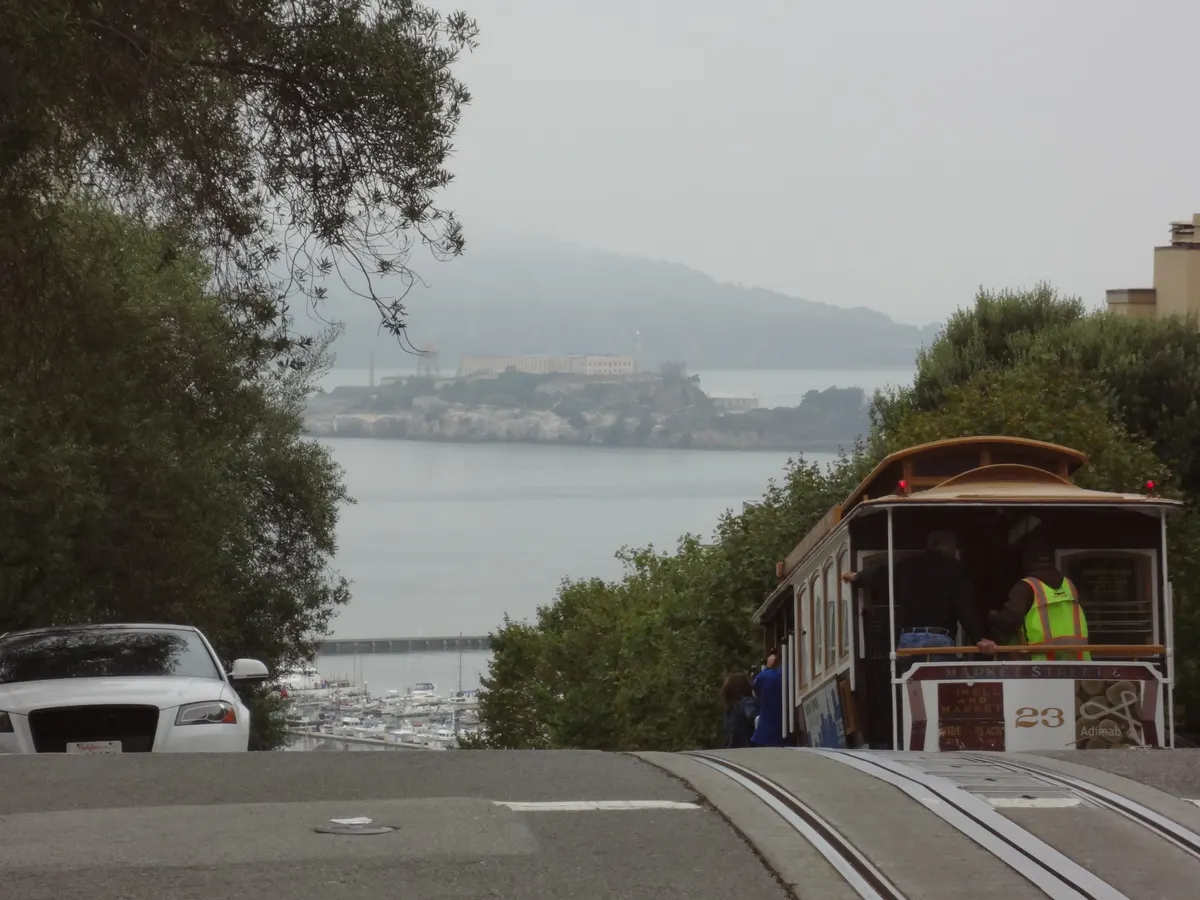
- Station to the streetcar. Plot the station exit and a suitable F-line boarding stop separately. The F route stop list includes the Ferry Building corridor and identifies the direction towards Fisherman’s Wharf. This is a street-level connection, not a same-platform interchange.
- Streetcar to the part of the Wharf you need. Compare the listed stops near Pier 39, Jefferson Street and the Jones/Beach end of the route against the hotel’s entrance. “Fisherman’s Wharf” is too broad to identify the best stop for every address.
- Last stop to hotel. Check the actual walking route with your bags. If that final walk does not suit the group, compare another stop or the road-transfer options before deciding.
For a specific boarding requirement, use SFMTA’s historic streetcar access guide. Do not infer that every F-line stop or every station exit has the same access arrangements. Check the complete stop pair and current equipment notices.
Compare a group total, not a headline fare
Use rail-and-streetcar total = sum of each rider’s airport fare + sum of each applicable connecting fare after eligible transfer credits + any payment-card cost. Check the credit conditions for the operator pair and payment method; neither two full fares nor a free connection should be assumed in advance.
For BART plus a car, add all applicable train fares to the quoted road leg from the actual downtown pickup. Compare that with the direct airport quote for the whole group. Include any fees and cancellation terms shown in the quote, rather than inventing a standard taxi or rideshare price.
Clipper’s contactless payment guide explains separate rider payment and card/device consistency. Plan each person’s payment before reaching the gate. A Muni-only sightseeing product should not be counted as paying for BART; see the operator and ticket boundaries.
Protect the arrival plan from a delayed flight
Run the planner for when you expect to leave the terminal, allowing for baggage collection and any immigration process. Check a later departure as well. Save the hotel entrance and a direct road alternative before flying.
If the flight is delayed, look up a fresh journey from your actual location. Do not rush to preserve a connection that no longer works. Keep luggage under your control and clear of doorways, following the operator’s instructions.
Once you have dropped the bags, choose sightseeing transport separately. The car-free city guide helps group outings without making an airport transfer dictate the rest of the visit.
Go to the source
Official references
- Airport Connections (SFO & OAK) ↗Bay Area Rapid Transit · Checked Oct 20, 2026
- F Market & Wharves ↗San Francisco Municipal Transportation Agency · Checked Oct 20, 2026
- Access on Historic Streetcars ↗San Francisco Municipal Transportation Agency · Checked Oct 20, 2026
- Tap to Pay with a Contactless Bank Card ↗Metropolitan Transportation Commission / Clipper · Checked Oct 20, 2026
This guide is research based, rather than a claim of firsthand testing. Read our editorial method or report a correction.